
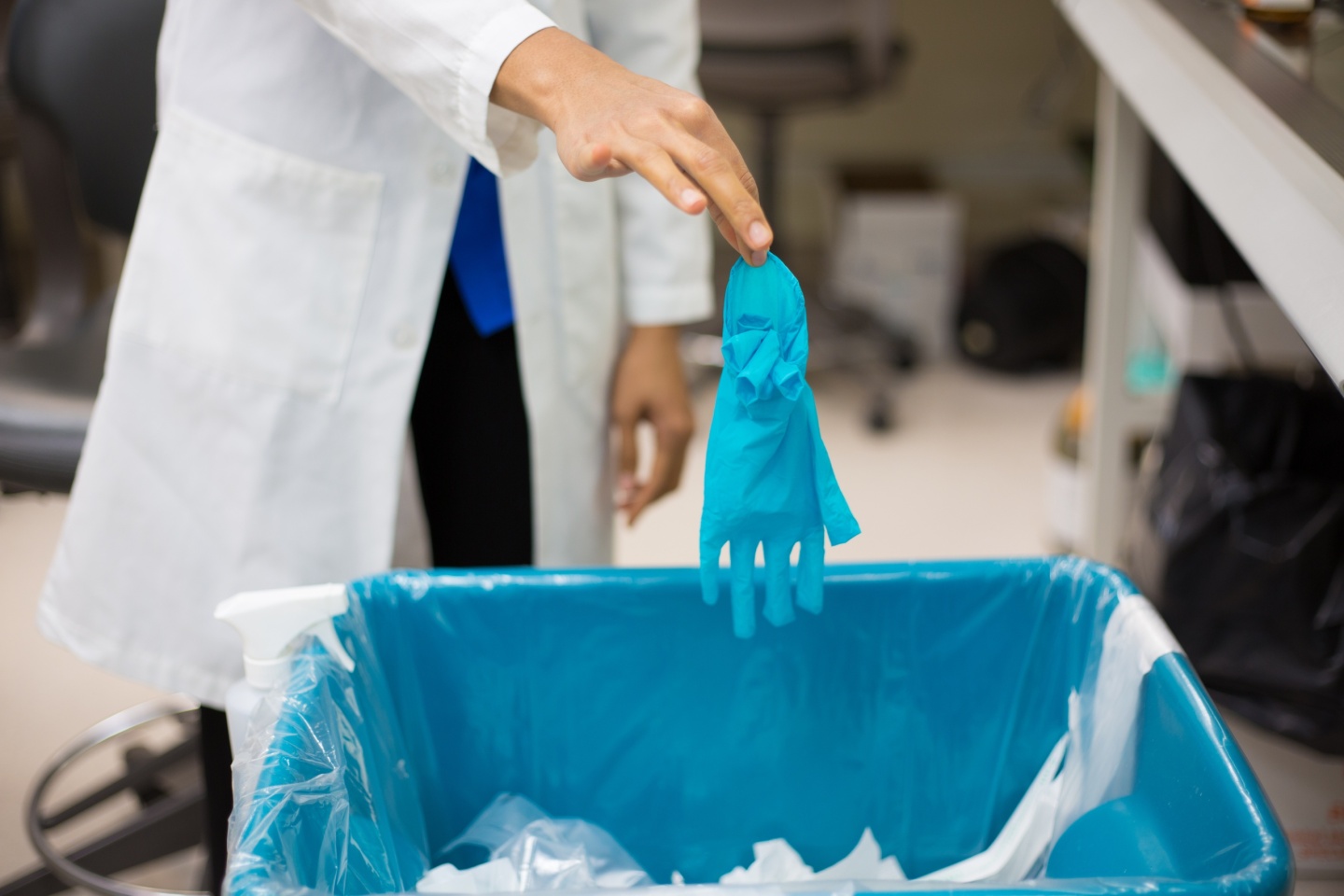
Laboratories generate a significant amount of waste. Consider these staggering statistics:
- Up to 5 million metric tons (5.5 billion kg) of plastic waste are generated by laboratories each year, representing nearly 2% of total global plastic waste.
- Research facilities produce up to 12x more waste than similarly-sized office spaces.
Reducing laboratory waste is increasingly becoming an important part of building more sustainable and resilient research operations. This article explores practical waste solutions that can be implemented independently, or as part of a comprehensive laboratory sustainability program such as the globally recognized My Green Lab Certification.
Understanding laboratory waste streams
Fully grasping what a laboratory uses and discards is an essential first step in developing an effective waste reduction strategy. Multiple approaches can help organizations evaluate waste generation patterns, depending on available resources and sustainability goals.
Waste audits provide direct insight into both material disposal and waste sorting behaviors. These assessments typically review general waste, recycling, solvent waste, and commonly used consumables such as gloves, pipette tips, and packaging materials. Audits can also identify operational gaps, including recyclable materials being incorrectly directed to landfill or incineration streams.
However, waste audits can be time-intensive, exclude hazardous waste streams, and may not always provide the most actionable insights such as clear long term follow-up plans or implementation guidance.
A valuable alternative approach is procurement-based analysis, which evaluates purchasing data to estimate waste generation based on product types and volumes. This method can provide a scalable, data-driven view of waste generation, allowing organizations to spot trends across multiple labs and sites.
For additional insight on this approach, see our recent article on how a study on procurement data was used to better understand laboratory waste while identifying opportunities for reduction.
Regardless of methodology, the objective remains the same: identify the most significant waste streams so laboratories can prioritize actions most likely to drive meaningful impact.
Strategies to reduce laboratory waste
The most effective waste reduction strategies begin upstream, before materials enter the lab or are even purchased.
1. Use verified product data to make informed purchasing decisions for lower waste products
Product selection plays an important role in reducing waste in the lab, but procurement teams and scientists need reliable, credibly backed data to make informed purchasing decisions.
Tools like the My Green Lab ACT Ecolabel provide third-party verified information on product materials, packaging, manufacturing, equipment, energy and water consumption, and available end-of-life options for reuse and recycling. By making this information accessible, the ACT Ecolabel helps lab and procurement teams evaluate waste-related product attributes without relying on supplier-provided claims or time-consuming individual requests for pertinent information. This helps organizations integrate sustainability considerations into purchasing decisions while supporting broader goals around waste reduction, transparency, and responsible procurement.
2. Leverage internal expertise and peer networks
Cross-functional collaboration can help accelerate waste reduction efforts across research environments. Organizations can create formal or informal channels for sharing best practices, unearthing opportunities and alternatives not previously visible or thought of.
The My Green Lab Ambassador network also provides a platform to share best practices with laboratory professionals from around the world. Learn more about this program here.
3. Reduce the impact of packaging materials
Scientific products often come with significant packaging, such as boxes, instructions, sterile wrapping, and padded shipping materials.
Organizations can reduce packaging-related waste through several strategies:
- Consolidate purchases across suppliers or reduce how often orders are placed.
- If possible, designate one person to manage orders, either across all suppliers or per supplier to reduce duplication and improve tracking.
- Purchase consumables in bulk to reduce shipments, when storage capacity allows.
- Right-size purchases to align with actual experimental needs and avoid excess materials or expired products.
- Prioritize products that arrive in packaging made from a high percentage of verified recycled content, as identified in the My Green Lab ACT Ecolabel database.
- Actively engage with suppliers to encourage the reduction of packaging, particularly unnecessary or single-use materials.
4. Reduce waste consumption in laboratory processes
Reviewing laboratory workflow can identify opportunities to reduce chemicals and plastic consumption. Simple actions include selecting tubes and pipette tips that match the required volumes and avoiding oversized consumables. Where suitable products are available, consider switching to bioplastic or lower‑impact alternatives like glass and metal when compatible with the application and safety requirements.
Reuse and Collaboration
Although reuse strategies in laboratory environments must always align with institutional environmental health and safety (EHS) and biosafety requirements, many opportunities exist to extend the useful life of materials and reduce unnecessary disposal.
1. Reuse of packaging
Laboratories regularly receive packaging materials including coolers, gel packs, and dry ice that may have additional opportunities for reuse. Examples include:
- Reusing dry ice from shipping boxes for other lab processes.
- Reusing coolers and gel packs to send samples to collaborators.
- Freezers use the least amount of energy when they are full of samples and have little “dead space.” Use empty polystyrene sample boxes or gel packs to fill unused space to support more efficient freezer operation.
2. Communicate and Collaborate
Organizations can further reduce waste through collaboration. Consider internal sharing systems, bulletin boards, or exchange programs and partnerships with local community colleges, high schools, or other research groups.
This opportunity applies not only to laboratory supplies, but also to redundant lab equipment and furniture. Such systems can help keep usable materials in circulation while supporting a culture of resource efficiency across the organization.
How to maximize the recycling of your lab waste
While recycling plays a role in lab sustainability, it should be considered only after efforts to replace, reduce, and reuse materials. Focusing on product replacement, reduction, and reuse strategies lower the impact on the environment more than relying on recycling.
When replace, reduction, and reuse are not available, proper recycling practices are still important:
- Always use clear signage to avoid misuse and contamination of specific waste bins.
- Confirm and align recycling practices with materials accepted by local recyclers and waste haulers.
Specific recycling opportunities may include:
1. Solvent waste
A high-impact option is the recycling of lab solvents. Laboratories that use specific solvents frequently can set up distillation systems to purify them for reuse. Common and more straightforward solvents to recycle include acetone, xylene, and ethanol.
As an example, the University of Colorado Boulder has implemented an effective solvent recycling system in which ethanol waste collected from chemistry laboratories is purified and then reused by biology laboratories for the sterilization of surfaces.
There are also companies that recycle solvents on a large institutional scale. To find out which options are immediately available, inquire with waste haulers and/or collectors to see if these services are provided. Before implementing solvent recycling initiatives, laboratories should ensure all systems and procedures comply with applicable regulatory requirements and institutional environmental health and safety policies.
2. Specialized recycling programs
For waste streams that cannot be reduced or reused, specialized recycling programs may be an option. These include programs available for gloves, packaging, and lab plastics including pipette tips, pipette tip boxes and racks, tubes, and media bottles.
However, these programs should be considered a supplement, not a substitute, for upstream waste reduction efforts, as recycling efforts often require additional resources and may have limited overall impact compared to replacing or reducing waste earlier in laboratory processes.
Advancing laboratory sustainability
Reducing laboratory waste is an ongoing process of understanding material breakdowns, altering purchasing habits, improving energy efficiencies, and building an organizational culture of shared responsibility. To learn more about the strategies outlined in this article, the My Green Lab Accredited Professional (AP) Program provides comprehensive, expert training on implementing effective waste reduction strategies in research environments, while advancing knowledge of laboratory sustainability.
When combining practical action with verified data, cross-functional collaboration, and continuous improvement, laboratories can reduce their waste while helping to advance a more sustainable future for science.