

The future of sustainable science is unfolding in labs, boardrooms, and supply chains across the globe. Despite external noise, real progress continues as sustainability becomes embedded in how science is funded, conducted, and scaled. Laboratories are highly resource-intensive environments, yet they also hold immense potential for climate solutions. In this video and article, James Connelly, CEO of My Green Lab and Impact Laboratories, outlines ten key predictions for 2026. Each highlighting a critical shift from ambition to accountability alongside system-wide transformation.
What’s next for sustainable science in 2026? In this clip from the 2026 My Green Lab Europe Summit, James Connelly shares key predictions shaping the future of the life sciences industry. The full event recording is available to watch on demand – register here for free access.
In 2026, sustainability commitments will quietly re-accelerate as companies move from cautious messaging back to measurable action.
2025 felt like a turning point for ESG—but not in the way headlines suggested. A shift in the U.S. political environment, combined with new federal scrutiny around DEI programs, created a chilling effect in boardrooms. Many companies became more cautious about how they communicated sustainability goals.
But in my conversations with leaders across the life sciences industry, something interesting happened: the rhetoric softened, but the work continued. Net-zero commitments remained intact, supplier engagement continued, and internal decarbonization programs moved forward largely unchanged. In fact, geopolitical instability and rising oil prices have only reinforced the importance of efficiency and reducing dependence on fossil fuels.
In science, the climate debate is settled. The real question is how quickly we act.
By COP39 in Turkey, the life science industry will begin aligning around a common set of supplier standards—including certified green labs and verified sustainable lab products.
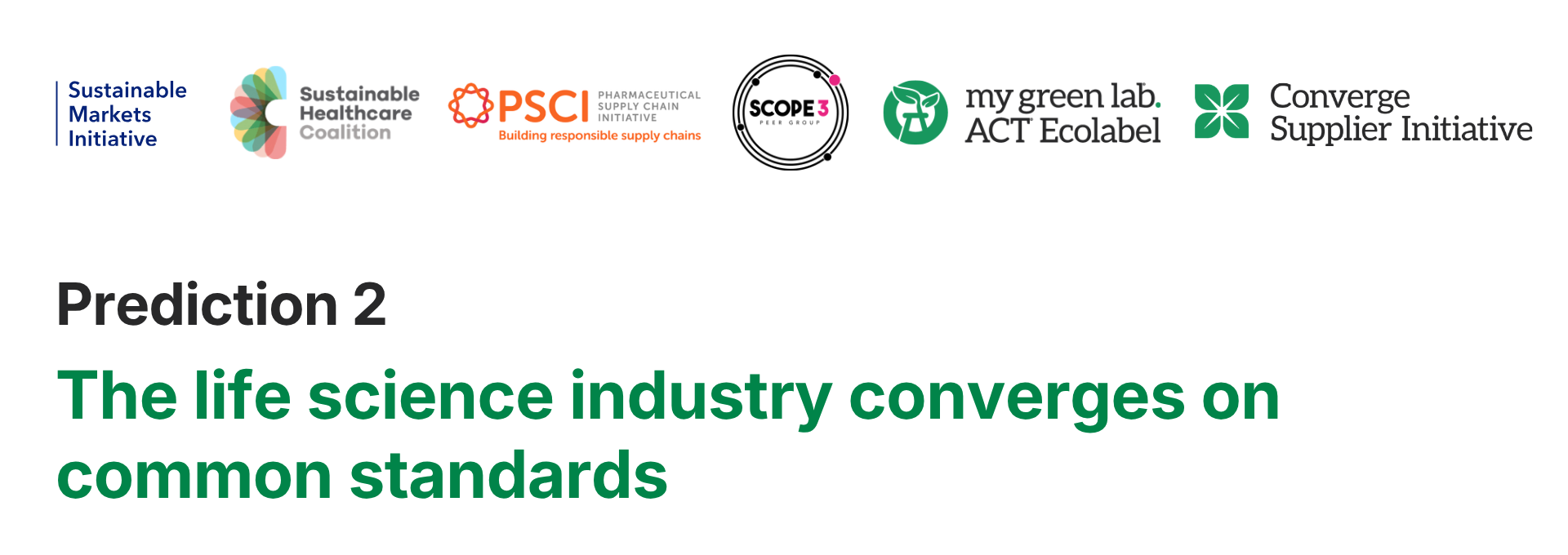
One of the most remarkable characteristics of the life science sector is its willingness to collaborate on pre-competitive challenges. The same infrastructure that enabled companies to align on quality and safety through organizations like the Pharmaceutical Supply Chain Initiative is now being applied to sustainability.
We are already seeing this convergence. The Sustainable Markets Initiative is expanding its membership and aligning companies around common supply chain actions. My Green Lab’s Converge initiative is driving alignment among pharmaceutical companies and CROs on sustainable laboratory practices. At the same time, major purchasers are beginning to coordinate around procurement requirements for products with ACT Ecolabel certification.
These efforts signal a broader shift: sustainability is moving from fragmented initiatives to shared industry standards.
By In 2026, greenwashing will rapidly disappear as companies transition toward credible third-party certifications, or face the consequences.
While much attention has focused on political pushback against sustainability policy, the regulatory landscape in Europe is moving in the opposite direction. The EU’s Empowering Consumers Directive now requires environmental claims to be verifiable and certifications to meet minimum standards for independence, credibility, and third-party verification.
This will fundamentally reshape sustainability claims in the life sciences sector. Programs built on self-declared labels will increasingly face legal and reputational risk. In fact, penalties for widespread misleading claims could reach €5 million or 4% of annual turnover.
We are already seeing early signs of this shift. Major distributors such as Fisher Scientific are phasing out internal “green choice” programs in favor of independent third-party standards.
In 2026, life sciences investment will rebound as funding stabilizes and new technologies reignite growth across the sector.
2025 was a difficult year for life science funding. Federal policy changes, tariffs, and uncertainty around NIH funding created a challenging environment for research organizations and biotech companies alike.
But the fundamentals remain strong. In fiscal year 2025, the NIH was still on track to obligate nearly its entire annual budget—roughly $47 billion—before the September 30 deadline, demonstrating the continued scale of federal investment in biomedical research.
At the same time, the transformative potential of AI-enabled drug discovery, precision medicine, and new therapeutic platforms is becoming impossible to ignore.
Within the next decade, data centers will become one of the largest sources of environmental impact for the life science industry.

Artificial intelligence is transforming drug discovery, diagnostics, and biological research—but it comes with a new environmental footprint.
Data centers already consume roughly 4–4.4% of U.S. electricity. With the rapid expansion of AI workloads, that number could reach between 6.7% and 12% of national electricity demand by the late 2020s.
Drug discovery is increasingly computational. Machine learning models analyze massive biological datasets, predict molecular interactions, and accelerate compound screening. The servers performing these calculations run continuously in hyperscale data centers.
In many ways, these facilities are becoming the “factories” of the digital life science economy.
By the end of the decade, decoupling growth from carbon will become the norm across the life science value chain and inspire other industries to follow suit.

One of the most encouraging trends in our recent Carbon Impact of Biotech & Pharma report is that the largest companies in the sector are beginning to decouple revenue growth from carbon emissions.
All of the top 25 global companies are already demonstrating year-over-year reductions in emissions intensity even as revenue grows. This trend will accelerate as sustainability expectations cascade through supply chains.
Large companies are increasingly requiring suppliers—including CROs, laboratories, and manufacturers—to meet their own climate commitments.
In 2026 and beyond, the focus will shift from accounting and offsets to real, operational emissions reductions.
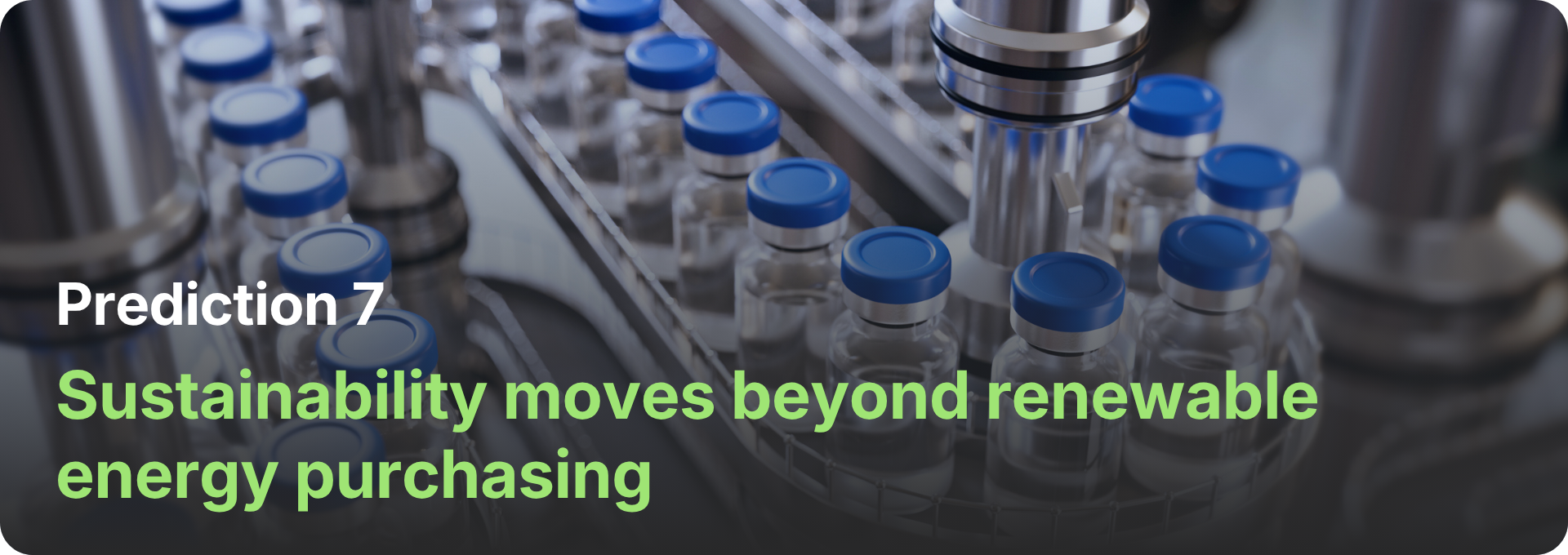
For the past decade, the easiest way for companies to reduce carbon emissions was through renewable energy power purchase agreements. These agreements were effective and helped build the renewable energy market.
But purchasing renewable electricity is only the first step. They are simply a financial instrument, and many agreement were signed for the economic and not the sustainability reasons, and may have been built anyway.
Now that many large companies have offset their onsite consumption through PPAs and electrification plans, attention is shifting toward the harder work: redesigning products, transforming supply chains, and changing how research and manufacturing actually happen.
Programs like My Green Lab Certification and ACT Ecolabel are beginning to play a central role by identifying real operational reductions.
Within the next two years, cold chain logistics will be recognized as one of the largest hidden emissions sources in the pharmaceutical industry.
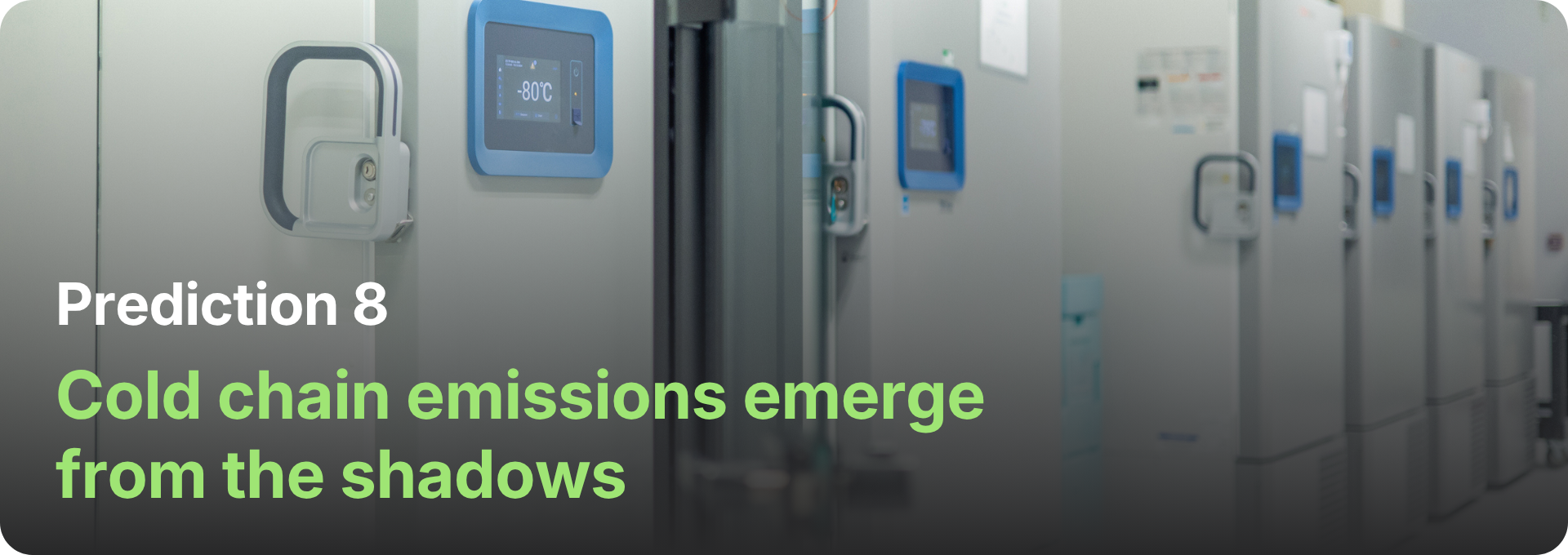
Temperature-controlled shipping has long been an overlooked contributor to pharmaceutical emissions.
My Green Lab is currently working with the Smart Freight Centre to better understand the true carbon impact of cold chain logistics across the life science sector. Early indications suggest that the footprint may be far larger than previously estimated.
Within the next year, the life science industry will recognize waste management as one of its greatest opportunities for rapid emissions reduction and pilot programs will be scaled.
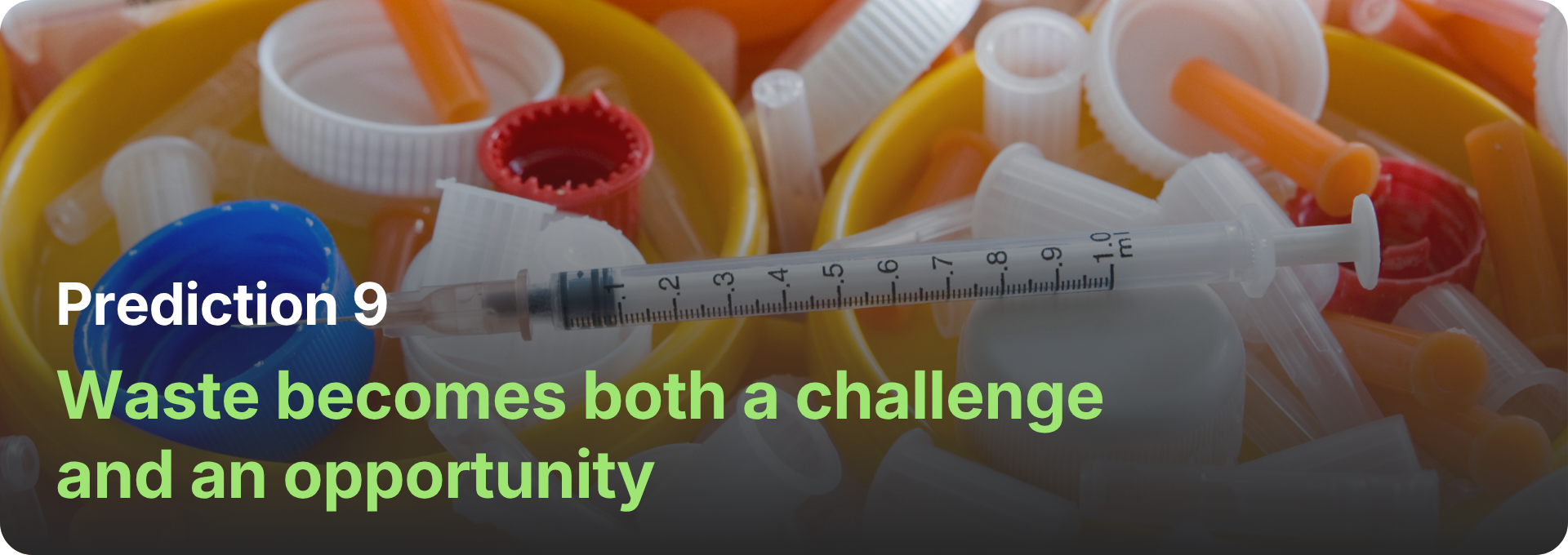
Regulated medical waste is another major environmental impact that has historically been under-measured.
Today, most red-bag waste is autoclaved or sent to industrial facilities for treatment before often being incinerated—sometimes transported hundreds of miles in the process. From a carbon perspective, it is one of the least efficient disposal systems imaginable.
However, new technologies are emerging that can reduce emissions from medical waste treatment by as much as 90%.
The next wave of climate innovation in life sciences will come directly from laboratories and R&D teams.
Ultimately, the most important solutions will come from the same place where scientific breakthroughs always begin: the lab.
New formulations, lower-carbon materials, alternative refrigerants, waste reduction strategies, and redesigned research processes all begin with scientists and R&D teams.
The sustainability movement is moving beyond goal-setting and carbon accounting toward something much more meaningful: changing how we design products, conduct research, and build the technologies of the future.
James is a visionary sustainability executive with a track record of growing organizations that have transformed industries in multiple sectors, including manufacturing, real estate, tech, and life science. Over his career, he consulted with and developed sustainability programs for some of the world’s largest companies and institutions. An internationally recognized corporate sustainability expert, James has deep knowledge of ESG reporting and strategy. James was selected as a Greenbiz 30 under 30 sustainable business leader in 2017 and a Net Zero Energy Trailblazer in 2019 and is passionate about rapidly catalyzing a global transition to Net Zero.