

My Green Lab’s 2025 Carbon Impact of Biotech & Pharma Report reveals a sector strengthening its climate leadership despite political and economic turbulence. This year’s analysis shows meaningful reductions among top performers, rising ambition across the industry, and clear pathways to accelerate Scope 3 action.
The biotechnology and pharmaceutical sectors sit at the intersection of human health, innovation, and global climate responsibility. Since 2021, My Green Lab has collaborated with Intercontinental Exchange (ICE) to evaluate how the industry is progressing toward a 1.5°C future. The 2025 Carbon Impact of Biotech & Pharma Report is the most comprehensive analysis to date, offering an in-depth look at emissions performance, target-setting trends, and alignment with global climate goals across more than 600 public and private companies.
My Green Lab unveiled the report’s findings during the virtual event Leading Through Change: Pharma’s Climate Commitment Amid ESG Headwinds. During the presentation and panel discussion, industry leaders emphasized that science continues to lead, even when politics do not.
“In the face of these political and economic headwinds, science is continuing to show leadership,” said James Connelly, CEO of My Green Lab, during the event. “We’re seeing some exciting progress.”
While the U.S. and U.K. have seen intensified rejection of ESG initiatives, life science organizations are moving in the opposite direction, raising ambition, improving disclosure, and accelerating decarbonization. This year 52% of evaluated companies set 1.5°C-aligned targets, up from 30% the year prior, underscoring that momentum is building.
Key Findings and Industry Progress
Year-on-Year Emissions Reductions from Leading Companies
The top 15 and top 25 biotech and pharma companies continued to show the strongest momentum, achieving around 10% annual reductions in Scope 1 and 2 emissions. Among top performers, Scope 3 reductions reached 5–10% per year, demonstrating that meaningful decarbonization is possible even in the most complex areas of the value chain.
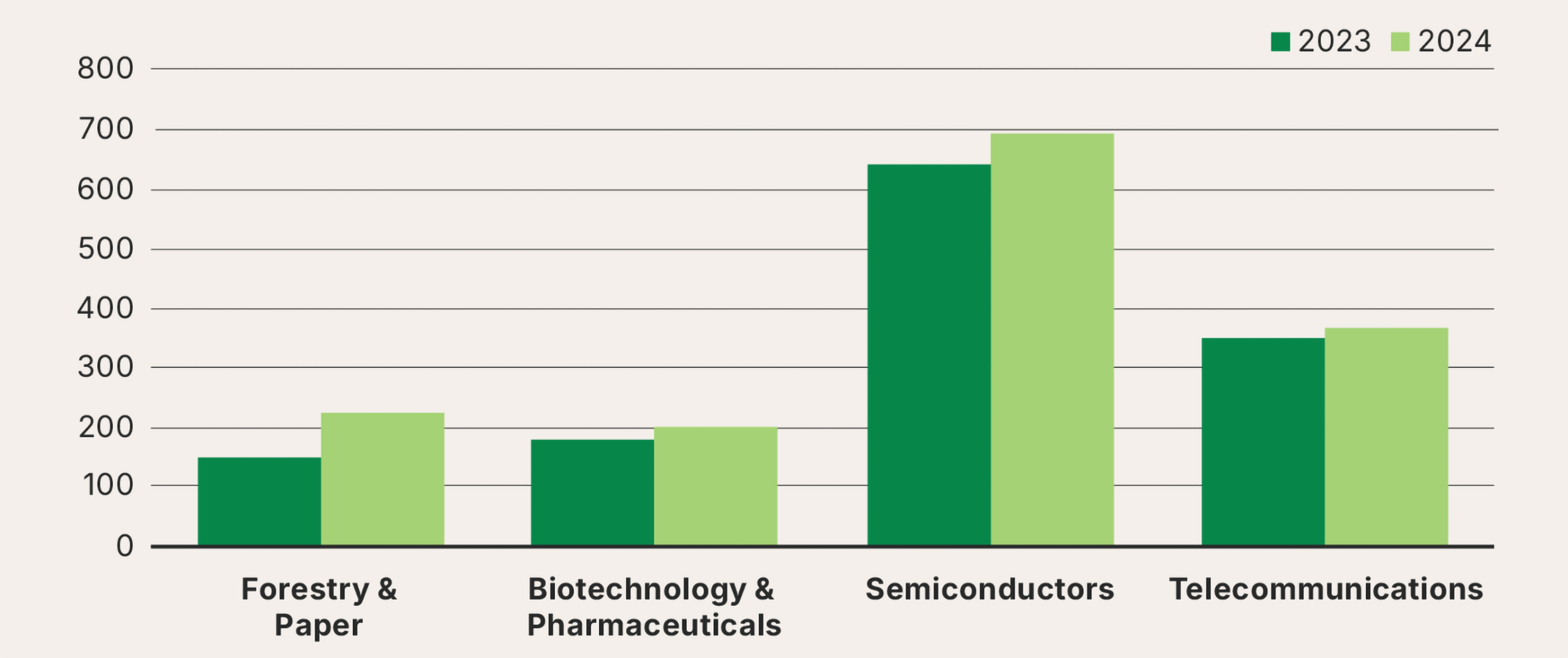
Total Sector Annual Carbon Output
Total Annual Emissions (tCO2e) in Millions (Public Data Quality 1 & 2)
Rising Ambition and Stronger Targets
52% of evaluated companies assessed now have targets aligned with a 1.5°C trajectory, up from just 30% last year – a major shift in sector ambition. This rapid increase reflects stronger internal climate governance, broader executive engagement, and clearer expectations from investors and global coalitions.
Improved Emissions Disclosure Quality
Disclosure quality continues to rise. ICE reports substantial increases in the number of companies providing complete Scope 1, 2, and 3 data, with more than 95% of evaluated companies reporting these emissions. Nearly two-thirds now provide high-quality Scope 3 disclosure across their most material categories. This means that companies are not only reporting more, they are also producing better data. These efforts are strengthening the accuracy and transparency of emissions assessments across the sector.
Scope 3 as the Defining Challenge – Opportunity for Impact
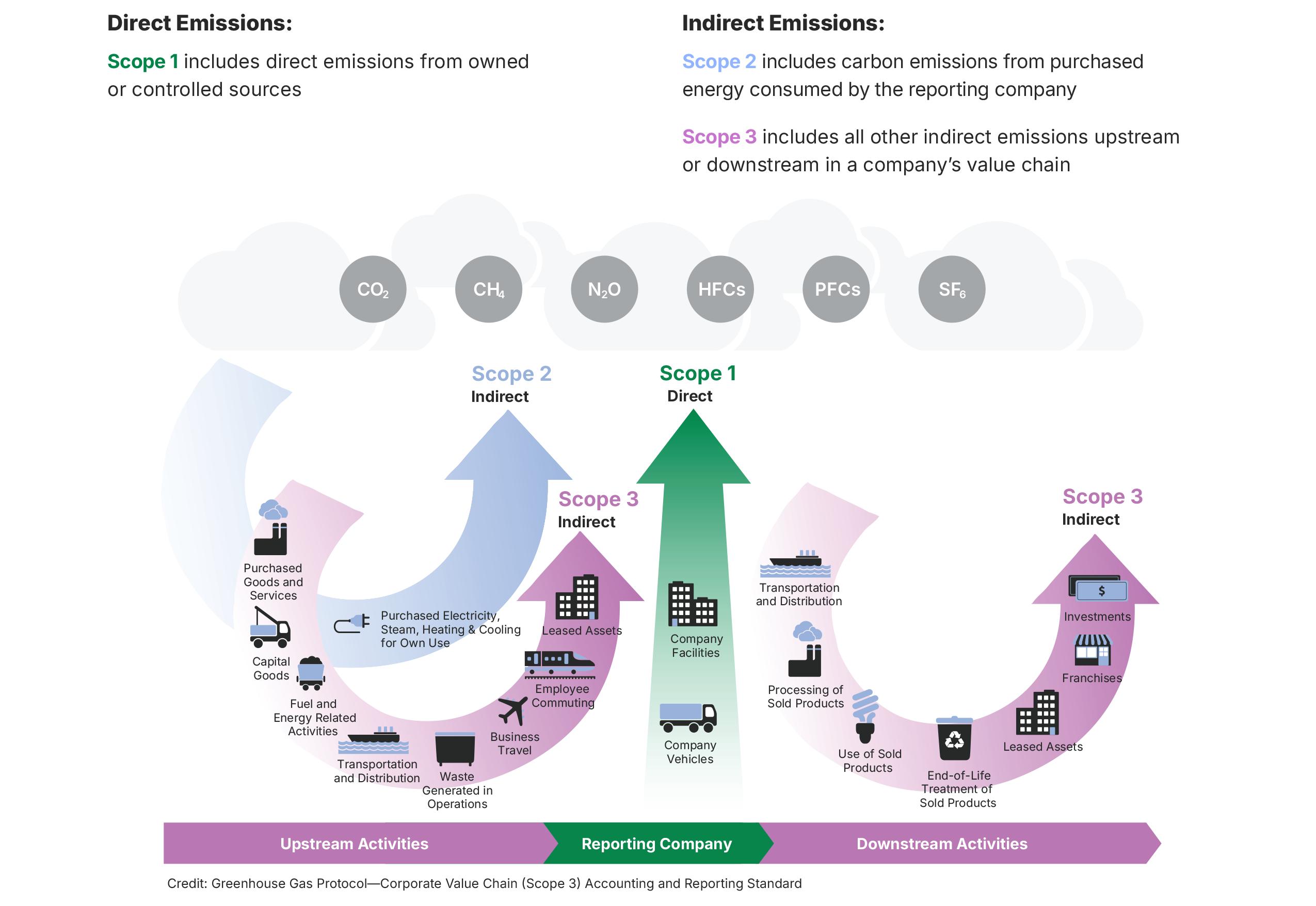
Scope 3 remains the largest source of emissions for the biotech and pharmaceutical sectors, accounting for 82% of the industry’s total footprint. These upstream and downstream activities are the hardest to measure and reduce, making them the defining challenge for climate progress. Encouragingly, participation in programs such as Converge and Energize continues to grow, signaling early momentum toward addressing these hard-to-abate categories.account for.
What the 2025 Data Tells Us About the Path Ahead
On the one hand, this report shows that the industry is making progress and that progress is accelerating. On the other hand, it makes clear that further action is essential. While some regions may be experiencing political backlash against ESG, that conversation remains largely disconnected from corporate reality. The data shows that sustainability efforts continue to rise and leading companies are steadily reducing emissions.
Yet the broader industry must move faster. To do so, it will need shared frameworks, consistent accountability, and deeper supplier engagement. Scope 3 remains the defining sustainability challenge of this decade, and operational improvements alone will not be enough. Decarbonizing the research supply chain is crucial to achieving long-term climate goals.
Fortunately, the findings shared in the 2025 Carbon Impact of Biotech & Pharma Report show that collective action works. When organizations collaborate through shared commitments, transparent data, and aligned supplier expectations, they achieve better results.
Download the full 2025 Carbon Impact of Biotech & Pharma report to explore the complete data, insights, and company-level progress.